Special

Is the killing of Hassan Nasrallah a game changer?

Is the killing of Hassan Nasrallah a game changer?

Saturday, Sep 28, 2024  #HassanNasrallah #Hezbollah #Israel

He led Hezbollah for more than three decades and made it into a military and political force to be reckoned with, in the long-running conflict in the Middle East.

Hassan Nasrallah's killing in a massive Israeli air attack in a southern suburb of Beirut is sure to open a new page in the ongoing war.

Israel is on high alert and says it is prepared for all options after it announced his death.

But will Hezbollah respond - and if so, how?

And how will the latest development shape the future of the armed group and its role in the region?

Presenter: Hashem Ahelbarra

Guests:
Nicholas Noe, Editor-in-Chief of Beirut-based Mideastwire.com.
Stephen Zunes, Professor of Politics and founding chair of Middle Eastern Studies at the University of San Francisco.
Gideon Levy, Columnist with the Haaretz Newspaper and Author of the book 'The Punishment of Gaza'.

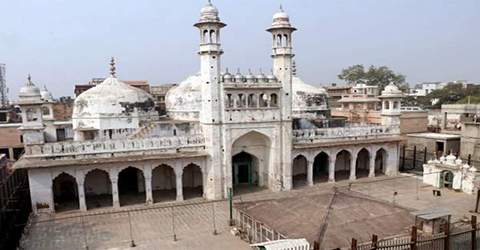
Varanasi: Worship started from today in Vyas basement located in Gyanvapi Mosque

Varanasi: Worship started from today in Vyas basement located in Gyanvapi Mosque

Thursday, February 1, 2024

Implementing the decision given on Wednesday, 31 January 2024 by the District Court of Varanasi in the Indian state of Uttar Pradesh, the district administration started worship in the Vyas basement located in the Gyanvapi Masjid complex on the morning of Thursday, 1 February 2024.

Varanasi District Magistrate S Rajalingam gave this information to journalists in the early hours of Thursday, February 1, 2024.

S Rajalingam said, "The court order given to me has been complied with."

Whereas in response to a question asked about the barricading in front of Vyas basement located in Gyanvapi campus, S. Rajalingam again said that 'the court order was complied with'.

When journalists asked S. Rajalingam whether the puja was conducted, S. Rajalingam again gave the same answer, "Whatever the court has said was complied with."

Call it a coincidence or a pre-planned plan that 38 years ago today (Thursday, 1 February 2024) in 1986, the lock of Babri Masjid in Ayodhya was opened on 1 February.

While talking to ANI on Thursday, February 1, 2024, Sohan Lal Arya, a plaintiff and lawyer in this case, has confirmed that a path to the Vyas basement has been made, but the people taking darshan are not allowed to go there right now.

Sohan Lal Arya said, "Today (Thursday, 1 February 2024) seems to be a very proud moment. We are thrilled from every corner. The decision of the District Judge yesterday (Wednesday, 31 January 2024) seemed unprecedented. Right now all the The arrangements are complete but right now the public is not being allowed to have darshan there (Vyas's basement). We were waiting for this moment for 40 years."

According to Sohan Lal Arya, "Now a separate door has been made from the side of Nandi (to the north) to go towards Baba's basement. There were three policemen there. We asked them to allow us to have darshan. On this they Said that right now there is no right for darshan and worship, all the devotees will be allowed to go there as soon as it is available."

Earlier, showing great haste, Varanasi DM S Rajalingam along with other top officials of police and administration went inside from gate number four of Kashi Corridor at around 11 pm on Wednesday, January 31, 2024. From there there is a way to go inside the Gyanvapi complex.

At the same time, many laborers reached there to make a path in front of the statue of Nandi located in the Vishwanath temple complex by cutting some part of the barricade around the Gyanvapi complex.

A large number of police personnel were also deployed there. Varanasi Police Commissioner Ashok Jain said that all arrangements for law and order were made.

Almost three hours later, at 2 am on Thursday, February 1, 2024, DM S Rajalingam came out of the premises and told the media, "The court order has been complied with."

Varanasi district court gave the order on Wednesday, January 31, 2024

On Wednesday, January 31, 2024, the District Court of Varanasi had given the Hindu side the right to worship in the Vyas basement of the Gyanvapi Mosque.

The District Court of Varanasi had written in its order, "The District Magistrate, Varanasi/Receiver is directed to hand over the basement situated on the south side of the building situated at Settlement Plot No. 9130, Thana Chowk, District Varanasi, which is the suit property. The plaintiff and the Kashi Vishwanath Trust Board should get the priest to start worshiping and worshiping the idols located in the basement."

The court had given the administration 7 days to implement this order. But the district administration acted very quickly and followed the court's order within 12 hours.

If only the district administrations of the states of India (especially the district administration of Varanasi) had shown so much promptness in the development work, then every district of India would have been a developed district and India would have been a developed country. India is seriously struggling with the problems of extreme poverty, hunger and unemployment. But the legislatures and executives of India and its states do not pay attention to this. Indian politics has become centered on religious issues, religious faith and religious sentiments. The consequences of which most of the people of India are facing in the form of problems like severe poverty, hunger and unemployment.

However, the Gyanvapi Masjid side has announced to challenge the decision of the Varanasi District Court in the Allahabad High Court.

It is certain that this decision of the Varanasi District Court will increase communal tension between Hindus and Muslims in India. Just as India has been burning in the fire of communalism for decades after the lock of Babri Masjid was opened by the court's decision. The fire of communalism in India has not yet been extinguished and this decision of the Varanasi District Court plunged India into the fire of communalism for decades. What will happen in the future? No one knows, but it is certain that it will have a bad impact on future India. For the future of India to be good, it is necessary that the legislature, executive and judiciary of India should refrain from taking any controversial work or decision without thinking or under any agenda which may lead to internal unrest in India or threaten the future of India.

Before us is the example of the decision given by the Manipur High Court, due to which Manipur has been a victim of large-scale violence between Meitei (Hindus, followers of Sanatan Dharma) and Kuki tribals (Christians) for the last several months. Lakhs of people were displaced and hundreds were killed due to this violence. Many women were raped and many women were paraded naked. India faced widespread criticism and opposition due to Manipur violence at the international level.

Work on the corridor connecting India, Middle East countries and Europe will start soon

The work on the corridor connecting India, Middle East countries and Europe may start soon. In the G-20 conference, Indian Prime Minister Narendra Modi announced Global Infrastructure and Investment (PGII) and India-Middle East-Europe Economic Corridor, saying that it will become an effective medium of economic connectivity between India, West Asia and Europe.

"This will provide a sustainable direction to connectivity and development across the world," Narendra Modi said in the presence of US President Joe Biden, Saudi Arabia's Crown Prince Mohammed bin Salman and European Commission Chief Ursula von der Leyen. Strong connectivity and infrastructure are the fundamental basis for the development of human civilization. India has given top priority to this subject in its development journey. Along with physical infrastructure, investment is being made on an unprecedented scale in social, digital and financial infrastructure. With this we are laying the strong foundation of a developed India.

Narendra Modi said, "We have completed infrastructure projects in technology sectors like energy, railways, water, technology parks as a reliable partner in many countries of the Global South. We have emphasized on demand driven and transparent approach. Through PGII, we can make an important contribution in reducing the infrastructure gap in the countries of the Global South. India does not limit connectivity to regional boundaries. We believe that connectivity not only enhances mutual trade but also mutual trust."

European Commission chief Urs von der Leyen said that the India-Middle East-Europe Economic Corridor is historic. This will be the fastest connection ever connecting these three. This will make the pace of business faster.

G-20: Serious disagreement between developed and developing countries on issues related to climate change

Unlike the annual UN conferences on climate change, the G-20 meetings generally do not see serious disagreements between developed and developing countries on actions to be taken to address this problem.

But this time in the G-20 conference, the picture regarding this looks different. In the meeting of environment ministers of G-20 countries, no consensus seems to be reached on achieving the goals like gradually reducing the use of fossil fuels, increasing the targets of renewable energy and reducing greenhouse emissions.

Whereas G-20 countries are responsible for 75% of the world's greenhouse gas emissions. At the G-20 conference, Russia, China, Saudi Arabia and India have opposed the goal of developed countries to triple the capacity of renewable energy by 2030.

News agency Reuters, quoting official sources, has said that in the Sherpa level meeting on September 6, 2023, these countries disagreed with the goal of developed countries to reduce greenhouse gas emissions by 60 percent by 2035.

China has rejected media reports that it had obstructed the consensus on steps to be taken to control climate change at the G-20 environment ministers' meeting held in July 2023.

China had appealed to developed countries to work according to their capacity, responsibilities and duties to eliminate the problem of climate change.

Fast-growing economies like China and India say that developed countries should fulfill their historical responsibility to reduce carbon emissions.

Whereas developing countries say that this task is difficult without the major economies coming together. The countries on both sides of the G-20 are adamant. This gives an indication of what is going to happen at COP 28, the annual UN conference on climate change.

Does Indian Union Muslim League have any relation with Jinnah's Muslim League?

In response to a question asked at the National Press Club of Washington DC, Rahul Gandhi, former President of the Congress Party of India, said that the Muslim League is a completely secular party.

Rahul Gandhi was asked whether the Congress alliance with the Indian Union Muslim League in Kerala is not against secularism?

In response to this, Rahul said, ''There is no such thing as against secularism with the Muslim League. I think the person who sent this question has not read Muslim League properly.''

The Indian Union Muslim League (IUML) is a regional political party in Kerala and has traditionally been part of the Congress-led coalition UDF.

Does Indian Union Muslim League have any relation with Jinnah's Muslim League?

After the partition of India in 1947, the All India Muslim League, which had spearheaded the movement for the creation of Pakistan, was disbanded. After the formation of Pakistan, Mohammad Ali Jinnah became the Governor General of the country. After the next few months, the Muslim League came into existence in West Pakistan and the All Pakistan Awami Muslim League in East Pakistan.

The Muslim League provided the first six Prime Ministers of Pakistan, their tenures were very short and finally General Ayub Khan imposed martial law, after which the Muslim League also dissolved.

General Ayub Khan later revived the Muslim League as the Pakistan Muslim League, which grew and waned for several decades. The most talked about faction of the Pakistan Muslim League is Nawaz Sharif's party headed by Shehbaz Sharif.

In East Pakistan, the Awami League fought for Bengali nationalism and tried to find a way to independence from Punjabi-dominated West Pakistan. Under the leadership of Sheikh Mujibur Rahman, East Pakistan broke away from West Pakistan and came into existence as Bangladesh.

In independent India, the All India Muslim League was replaced by the Indian Union Muslim League and has a completely different history. The IUML contests elections under the Constitution of India and has a consistent presence in the Lok Sabha.

IUML is a strong party in Kerala and has a unit in Tamil Nadu as well. The Election Commission of India has long recognized it as the state party of Kerala.

The green flag of the IUML has a white moon and star on the top left and is completely different from the flag of Pakistan.

From the 3rd to the 16th Lok Sabha, two MPs from the IUML have always been in the Lok Sabha. Only in the second Lok Sabha it had no MP while in the fourth Lok Sabha it had three MPs.

The IUML has been a long-time coalition partner of the Congress and is part of the opposition UDF coalition in Kerala. The IUML has 18 MLAs in the current Kerala Legislative Assembly, compared to 20 MLAs in the 2011 Kerala Legislative Assembly.

George Soros' statement is a declaration to destroy India's democratic process: Bharatiya Janata Party

India's Bharatiya Janata Party has strongly criticized American businessman George Soros.

On Friday, February 17, 2023, Union Minister in India's Narendra Modi government and Bharatiya Janata Party leader Smriti Irani held a press conference and said that George Soros' statement is a declaration to destroy India's democratic process.

George Soros had said in Germany's Munich Defense Conference that India is a democratic country, but Prime Minister Narendra Modi is not democratic and the violence against Indian Muslims is the main reason for Modi's fast becoming a big leader.

George Soros said that India buys oil from Russia at a lower price. According to George Soros, Modi is currently silent in the Gautam Adani case but he will have to answer questions from foreign investors and in Parliament. This will weaken their hold on the government.

George Soros even claimed that this would lead to a revival of the democratic process in India.

Earlier in January 2020, in a program of the World Economic Forum meeting held in Davos, criticizing Indian Prime Minister Narendra Modi, George Soros had said that India is being made a Hindu nationalist country.

George Soros said in a program of the World Economic Forum meeting held in Davos in January 2020 that this is the biggest and most terrible blow to India, where the democratically elected Narendra Modi is making India a Hindu nationalist country.

George Soros also said that Modi is punishing the people of Kashmir by imposing sanctions and threatening to take away citizenship from millions of Muslims through the Citizenship Act (CAA).

Criticizing Soros on Friday, February 17, 2023, Smriti Irani said that efforts are being made to weaken India's democratic structure from foreign soil.

According to Smriti Irani, this is an attempt to interfere in India's internal affairs.

Smriti Irani appealed to all Indians to give a befitting reply to this.

Congress has also given its reaction on the statement of George Soros.

Congress party general secretary and media head Jairam Ramesh tweeted, "Whether or not the Adani scam involving the PM initiates a democratic resurgence in India entirely depends on the Congress, the opposition and our election process."

"This has nothing to do with George Soros. Our Nehruvian legacy ensures that people like him cannot decide our election results."

Shiv Sena's Rajya Sabha MP Priyanka Chaturvedi has criticized the BJP.

Priyanka Chaturvedi tweeted, "Who is George Soros and why is BJP's troll ministry holding a press conference on him. By the way, Minister, would you like to say something on the Israeli agency's interference in India's election process? He is a bigger threat to India's democracy."

Trinamool Congress Lok Sabha MP Mahua Moitra took a jibe at Smriti Irani, saying, "Respected cabinet minister has called upon every Indian to give a befitting reply to George Soros. Please bang the plate at 6 pm today."

Serious allegations against China in UN report on persecution of Vigar Muslims

In a report on allegations of harassment in China's Xinjiang province, the United Nations has accused China of serious human rights violations.

China has appealed to the United Nations (UN) not to release the report and called it a "spectacle" of Western countries.

The report claims persecution of Vigar Muslims and other ethnic minorities, which China has denied.

But investigators say they have found credible evidence of torture that could be called "crimes against humanity".

He has accused China of using vague national security laws and arbitrary detention of people to suppress the rights of minorities.

The Office of the United Nations High Commissioner for Human Rights was asked to prepare this report. The report said that prisoners are treated badly, including sexual and gender-based violence.

Apart from this, the policies of family planning are imposed on them in a discriminatory manner.

China is accused of keeping Vigar Muslims in detention camps in Xinjiang.

The United Nations has recommended that China should take immediate steps to release those whose freedoms have been taken away. It has also been said that some actions of China may come under international crime. It also includes crimes against humanity.

The UN has said that it cannot be ascertained how many people the government has held. Human rights groups say more than one million people have been detained in Xinjiang province.

The World Vigar Congress, which leads 60 organizations, has welcomed the report and called for an immediate international response.

However, China, which has already seen these reports, has denied the allegations of harassment and said that these camps are a way to fight terrorism.

Iran gives stern warning to Israel over friendship with Arab countries

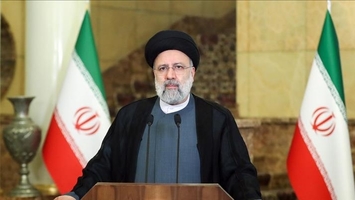
Iran's President Ibrahim Raisi has criticized the normalization of relations between some Arab countries and Israel and has also warned Israel about it.

Ibrahim Raisi spoke of relations between Arab and Israel countries during a military parade in Tehran on Iran's National Army Day.

He warned Israel there, saying, "If Israel wants to normalize relations with some countries, then it knows that its smallest actions are not hidden from us."

"If they make a mistake, we will directly strike the heart of the Jewish regime, and the power of our army will not allow them to sit in peace."

According to Iranian media, the military parade took place after a gap of two years due to the Corona epidemic, which was organized in the presence of senior Iranian leaders and military officials.

New weapons and equipment of the army were also displayed in it. During this, Ibrahim Raisi also praised Iran's Revolutionary Guards.

The enmity between Iran and Israel is well known

Iran does not recognize Israel. Whereas Israel has also said many times that it will not tolerate nuclear-powered Iran. Donald Trump ended the nuclear deal between Iran and the West. But since Joe Biden became president, efforts were on to implement the nuclear deal anew.

In March 2022, these talks were also canceled because Iran wanted the US to remove the Revolutionary Guard Corps from the list of its foreign terrorist organization, but this issue could not be resolved and the talks also stopped.

Iran has repeatedly alleged that Israel has attacked its nuclear bases and killed Iranian nuclear scientists. Israel neither denies nor confirms these allegations.

At the same time, undeclared conflicts at sea between Israel and Iran also come to the fore, in which there are mysterious attacks on ships.

Israel has been expressing its concerns about Iran's nuclear program. Israel suspects that Iran is building nuclear weapons, which Iran has denied.

Iran's eyes on Israel and Gulf countries close

In recent years, many Gulf countries have come closer to Israel. Just in March 2022, a big conference of four Arab countries was organized in Israel, in which US Secretary of State Antony Blinken also arrived to attend.

The foreign ministers of the United Arab Emirates, Bahrain, Morocco and Egypt participated in the conference. This was the first time that Israel had organized a meeting of senior officials from so many Arab countries.

Such a meeting and close is also being seen as a new regional alliance against Iran in the Middle East. It is also being said that the meeting has also made it clear that now Arab countries are ready to increase relations with Israel without resolving the issue of Palestine dispute.

According to reports in the Israeli media, at the end of the meeting, Israeli Foreign Minister Yair Lapid told that a "regional arrangement" for protection from drone and missile attacks, sea attacks among all the countries participating in the conference. There was a discussion. Yaer Lapid was referring to Iran or its allies.

Actually, all these countries have been raising questions about Iran's activities.

Saudi Arabia, Bahrain and the UAE have also always been suspicious of Iran and its Islamic Revolutionary Guard Corps (IRGC). BBC security correspondent Frank Gardner cited one of the reasons for this in his report, writing, "They are cautious about Iran because Iran has created a network of powerful proxy militia groups in the Middle East in violation of international sanctions."

In such a situation, Iran is openly expressing its hostile relations with Israel, as well as giving a signal to the Arab countries about its stand by targeting Israel.

However, on National Army Day, Ibrahim Raisi said, "Our strategy is not to attack but to defend."

"Iran's military has made good use of the sanctions opportunity to further strengthen itself and our military industry is in the best shape possible," he added.

Live: Russia's attack on Ukraine

Establishment of Israel in Palestine: Fall of Palestine, Rise of Israel

The conflict between Israel and Palestinian fighters has begun once more. The level of shelling that is being seen this time, it did not happen in the last several years.

Palestinian extremists have fired several hundred rockets from the Gaza Strip into the territory of Israel, and Israel has responded to this by its devastating airstrikes.

The target of rockets fired by Palestine is Israeli cities like Tel Aviv, Modine, Birsheba. Israel's missile defense system is responding to attacks by the Iron Dome Palestinian side. But the ringing of the sirens of danger has not stopped yet.

Israel has carried out airstrikes at several Gaza locations. There has been loss of life and property on both sides. Dozens of Palestinians have been killed, while on the other hand at least 10 Israelis have died.

This armed conflict has started after weeks of tension between Israeli police and Palestinian protesters in Jerusalem. Jerusalem is a place that is considered sacred to Jews and Muslims around the world.

The international community has appealed to both sides to maintain peace. In the Middle East, UN peace envoy Tor Vainsland has said that there is a danger of large-scale fighting there.

But the struggle of Israel and Palestinian people is years old and should be viewed from the same perspective. Why is the dispute between Israelis and Palestinians so complicated and why is the world divided about it? To understand this, we need to know the history of Israel and Palestine.

How did the conflict begin?

Jews were being targeted in Europe in the early twentieth century. Under these circumstances, the demand for a separate country for the Jewish people began to gain momentum. The region of Palestine, which lies between the Mediterranean Sea and the Jordan River, was considered sacred to all three Muslims, Jews and Christianity. Palestine was controlled by the Ottoman Empire and was largely held by the Arabs and other Muslim communities.

Amidst all this, a large number of Jews came to settle in Palestine and the people of Palestine started protesting against them.

After the First World War (1914–1918) the Ottoman Empire (the Kingdom of Osmania) disintegrated and Britain got the approval of the United Nations to take the administration of Palestine under its control.

But before the First World War and during the fighting, the British had made many promises to the Arabs and the Jewish people in Palestine, which they could not fulfill even a small part. Britain had already partitioned the Middle East with France. This led to tensions between the Arab people and Jews in Palestine and triggered violent clashes between armed groups on both sides.

After World War II (1939–1945) and the widespread massacre of Jews at the hands of Hitler and the Nazis in Germany, there was increasing pressure on the demand for a separate country for Jews. At that time it was planned that the territory under British control would be divided between the Palestinians and the Jews.

Finally, on 14 May 1948, with the help of Britain, Israel was forcibly established in Palestine. And Palestine was annihilated by the Jews. With the formation of Israel, a local tension turned into a territorial dispute. The very next day Egypt, Jordan, Syria and Iraq attacked this area. This was the first Arab-Israel conflict. It was also called the alleged freedom struggle of the Jews. After the end of this war, the United Nations secured half the land for an Arab state.

The period of tragedy started for the Palestinians from there itself. Seven and a half million Palestinians had to flee or take refuge in neighboring countries or were expelled and evicted by the Jewish armed forces.

But the year 1948 was not the last conflict between Jews and Arabs. In the year 1956, there was a dispute over the Suez Canal and Israel and Egypt again stood opposite each other. But this matter was resolved without war.

But the Arab-Israeli conflict lasted for six days in 1967 was the last major battle in a way. The war between 5 June 1967 and 10 June 1967 saw long-term effects on many levels.

Israel won the military alliance of the Arab countries. The Gaza Strip, Egypt's Sinai Peninsula, Jordan to the West Bank (including East Jerusalem) and the Golan Mountains from Syria came under the control of Israel. Five lakh Palestinians were displaced.

The last Arab-Israel conflict was the Yom Kippur War of 1973. Egypt and Syria fought this war against Israel. Egypt regained the Sinai Peninsula. In the year 1982, Israel gave up its claim on the Sinai Peninsula but not on Gaza. Six years later Egypt became the first Arab country to have a peace deal with Israel. Jordan followed suit.

Why was Israel established in the Middle East?

The Jews believe that this is the area where Israel is inhabited today, which God promised to give to Abraham and his descendants, their first ancestors.

In the past, this area was under attack from Assyrians (the tribal people living in present-day Iraq, Iran, Turkey and Syria), Babylon, Persia, Macedonia and Roman people. In the Roman Empire itself, this area was named Palestine, and seven decades after Christ, the Jewish people were evicted from this area.

With the rise of Islam, Palestine came under the control of the Arabs in the seventh century and was then conquered by the European invaders. In the year 1516, Palestine went under the control of the Ottoman Empire (Osmania Empire) and then after the First World War, on 29 September 1923, Britain occupied Palestine. Which lasted until May 15, 1948, the day after the founding of Israel on May 14, 1948.

To allow a smooth transition of power after 15 May 1948, Britain as a mandatory power was to hand over the UN Palestine Commission as the Provisional Government of Palestine.

On September 3, 1947, a United Nations Special Committee on Palestine submitted its report to the General Assembly. In this report, the committee accepted religious and historical arguments for the establishment of a Jewish nation in the Middle East.

In the Balfour Declaration of 1917, the British Government agreed to give Jews a 'national house' in Palestine. The Declaration recognized the historical connection of the Jewish people with Palestine and based on this, laid the foundation of the Jewish state in the territory of Palestine.

After the genocide of millions of Jews at the hands of the Nazis in Europe and during World War II, international pressure to recognize a separate Jewish nation began to increase.

Britain took up this issue for the consideration of the United Nations after failing to resolve the growing tension between the Arab people and the Jews.

On 29 November 1947, the United Nations General Assembly approved the plan for partition of Palestine. It recommended the formation of an Arab country and a Jewish state, as well as a special arrangement for Jerusalem.

This plan was accepted by the Jews but rejected by the Arab people. They saw it as losing their land. This was the reason why the United Nations plan could never be implemented.

The formation of independent Israel was announced on May 14, 1948, the day before Britain's control over Palestine came to an end. The next day, Israel applied for UN membership, and a year later it was approved. Among the member countries of the United Nations, 83 percent of the countries have recognized Israel. As of December 2019, 162 of 193 countries had recognized Israel.

Why are there two Palestinian territories?

The United Nations Special Committee on Palestine submitted a report to the General Assembly in 1947, recommending that the Western Galley (the mountainous region of Samaria and Judea) be included in the Arab nation.

The committee had recommended keeping the coastal plain of Ishud bordering Jerusalem and Egypt out of it.

But the division of this region was defined by the Armaistice line drawn in the year 1949. This line was drawn after the formation of Israel and the first Arab-Israeli War.

These two regions of Palestine are the West Bank (which includes East Jerusalem) and the Gaza Strip. These two areas are at a distance of 45 km from each other. The area of ​​the West Bank is 5970 square kilometers, while the area of ​​the Gaza Strip is 365 square kilometers.

The West Bank lies between Jerusalem and the eastern part of Jordan. Jerusalem is described by both the Palestinian side and Israel as its capital.

The Gaza Strip is a 41 km long area, whose width varies between 6 to 12 km.

Gaza has a 51-km border with Israel, seven kilometers with Egypt and 40 kilometers along the Mediterranean coast.

The Gaza Strip was taken over by Israel in the 1967 war. In 2005, Israel relinquished its hold on it. However, Israel controls the influx of people, goods and services from the Gaza Strip to air, land and sea in every way.

The Gaza Strip is currently a territory controlled by Hamas. Hamas is Israel's armed group that does not recognize Israel's pact with other factions of Palestine.

In contrast, the West Bank is ruled by the Palestinian National Authority. The Palestinian National Authority recognizes the international community as the government of the Palestinians.

Has there ever been an agreement between the Palestinians and the Israelis?

After the formation of Israel and the displacement of thousands of Palestinians, the Palestinian movement began to take root in refugee camps in the West Bank, Gaza, and Arab countries.

This movement had the support of Jordan and Egypt.

After the 1967 war, Palestinian organizations such as 'Fatah' led by Yasir Arafat formed the 'Palestinian Liberation Organization'.

The PLO initiated action against Israel, first from Jordan and then from Lebanon.

But these attacks targeted all targets within and outside Israel. There was no discrimination between Israel's embassies, players, its airplanes.

The Israeli targets were attacked for years by the Palestinians, and finally in 1993, the Oslo Peace Accord was signed by the PLO and Israel.

The Palestinian Liberation Organization promised to abandon the path of 'violence and extremism' and accepted Israel's right to live with peace and security. However, Hamas does not accept this agreement.

After this agreement, the Palestinian National Authority was formed and this organization got the right to represent the Palestinian people on international forums.

The president of this organization is elected by direct voting. The Chairman appoints a Prime Minister and his Cabinet. It has the authority to manage civic amenities in urban and rural areas.

East Jerusalem, historically considered the capital of the Palestinians, was not included in the Oslo peace settlement.

There is a deep dispute between the two sides regarding Jerusalem.

What are the main points of dispute between the Palestinians and the Israelis?

The delay in the formation of an independent Palestinian nation, the settlement of the ghettos in the West Bank and the security cordon surrounding the Palestinian territory are the reasons that hamper the peace process.

The International Court of Justice in The Hague has also criticized Israel's security cordon around the Palestinian territory.

In 2000, when the last serious effort was made to reconcile between the two sides in the presence of President Bill Clinton at Camp David in the US, it was clear that this is not the only obstacle in the path of peace between the Palestinians and the Israelis. .

At the time, Bill Clinton had failed to reach a compromise between Israeli Prime Minister Ehud Barak and Yasir Arafat. The issues on which there was disagreement between the two sides were the issue of Jerusalem, the border and land, the ghettos and Palestinian refugees.

Israel claims that Jerusalem is its territory. It says that since the capture of East Jerusalem in 1967, Jerusalem has been its capital, but it is not recognized internationally. The Palestinian side wants East Jerusalem to be its capital.

The Palestinians demand that the Arab-Israeli war that lasted six days, or the situation before June 4, 1967, determine its boundaries, which Israel refuses to accept.

Jewish settlements have been settled by Israel on occupied lands. They are illegal under international laws. More than half a million Jews live in these settlements in the West Bank and East Jerusalem.

The actual number of Palestinian refugees depends on who counts it. The PLO says that their number is more than one crore. Half of these people are registered with the United Nations. The Palestinians say that these refugees have the right to return to their land. But the land they are talking about is Israel today, and if that happens, what will happen to its identity as a Jewish nation.

Is Palestine a Country?

The United Nations recognizes Palestine as a 'non-member-observer state'.

The Palestinians have the right to participate in General Assembly meetings and debates to improve their chances of subscribing to UN organizations.

In 2011, Palestine applied for full membership but it did not happen.

More than 70% of the United Nations General Assembly members recognize Palestine as a state.

Why is America the main partner of Israel? Who has the support of Palestine?

For this, the importance of the pro-Israel vigorous lobby in America has to be understood. Public opinion in the US also supports Israel's stand.

Therefore, it is virtually impossible for a US president to withdraw support from Israel.

Apart from this, both countries are also military allies. Israel has received the most help from the United States. This help comes in the form of arms purchases and money.

However, in 2016, when the Security Council was voting on criticism of Israel's Jewish settlements policy, the Obama administration did not exercise its veto power.

But after the arrival of Donald Trump in the White House, the relationship between the two countries got new life. The US moved its embassy from Tel Aviv to Jerusalem. With this, America became the first country in the world to recognize Jerusalem as the capital of Israel.

In the last days of his term, President Trump was successful in normalizing Israel's relations with wealthy Arab countries.

However, since the Biden administration took power, Israel has adopted a strategy to distance itself from the risky conflict in Palestine. Experts say that the Biden administration sees this as a problem that requires huge political capital and what will be achieved is not sure.

US support to Israel continues, but the Biden administration's diplomacy appears to be a precaution. However, after the current violence, Biden may face criticism from his party's left wing, which have been critical of Israel.

On the other hand Turkey, Pakistan, China, India, Malaysia, Saudi Arabia, United Arab Emirates, Egypt, Syria, Iran and many Arab countries are with Palestinian people on the issue of Palestine. There is a feeling of sympathy for the Palestinians in Arab countries.

What is the way to peace and what needs to be done for it?

Experts say that for permanent peace, Israel should accept the sovereignty of the Palestinians, including Hamas. He should end the blockade with Gaza and also lift restrictions in the West Bank and East Jerusalem.

On the other hand, Palestinian factions have to abandon the path of violence for permanent peace and accept Israel.

Both sides have to reach an acceptable agreement on the issue of borders, Jewish settlements and the return of Palestinian refugees.