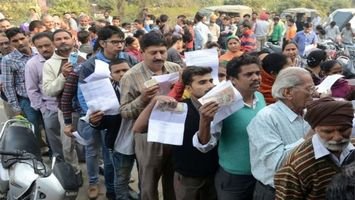
Except Gujarat, the employment centers in India have an average of 0.57% for job creation in 2015, ie only three out of every 500 registered jobs in the employment center get employment. This average in Gujarat has been more than 30 percent over the last several years.
Except Gujarat and Goa, no state of India could give employment to one percent of the people (candidates). However, in the first nine months of 2015, the number of people registering in the employment centers under the Ministry of Labor and Employment was increasing rapidly. For the past four years, the number of people registering in employment centers is increasing.
Under the National Career Service, three thousand people were given private and government jobs in 53 sectors in the employment centers running across India. According to information available on the National Career Service portal, during this time, a total of 14.85 lakh people had registered for the job. The portal also employs a job fair so that employers and candidates can communicate among themselves. According to the Ministry of Labor's annual report, most of the jobs provided by the employment center were from the private sector. Data from the year 2012 to September 2015 has been collected by the Ministry of Labor and Employment.
Gujarat is the top in the country in terms of job placement, but the number of job seekers is highest in Tamil Nadu. In the first nine months of 2015, 80 lakh people registered in the employment center in Tamil Nadu. In Gujarat, only 6.88 lakh people have registered for the job.
In the case of job registration, after Tamil Nadu, West Bengal, Uttar Pradesh, Kerala and Maharashtra were in place. About 60 percent of the candidates who registered for jobs in 2015 (2.71 crore) were from these five states. In these five states, 27,600 people got employment from the employment center. That is, in these states 0.1% people could get employment through employment centers.
According to statistics, the number of people registering in the employment center has increased in the last few years. In 2012, 4.4 crore people had registered, so in 2014, 4.82 crore people had registered. In the first nine months of 2015, 4.48 crore people had registered. If calculated based on the average of the first nine months, the number of registered people in employment centers in the year 2015 could be about 5.98 crore.
According to the statistics, the number of job seekers is increasing in the last few years, the rate of getting job is decreasing.
Gujarat's record is incredible in terms of getting a job. In the nine months of 2015, 83.3 percent (2.11 lakh) out of 2.53 lakh jobs provided by the employment centers were given in Gujarat. If the matter was done only by number, Maharashtra was ranked second in terms of job placement, where 13,400 people got jobs in the first nine months of 2015.
There are a total of 997 employment centers across India. The highest 99 employment centers are in Uttar Pradesh. Uttar Pradesh is followed by Kerala (89), West Bengal (77), Haryana (59), Assam (52), Madhya Pradesh (49), Gujarat (48), Chhattisgarh (47) and Maharashtra (47). There are only one employment center in Goa, Andaman Nicobar Islands, Dadar and Nagar Haveli, Lakshadweep and Puducherry.
Between January and April 2017, the total number of jobs in the country has decreased to 405 million, which was 406.5 million between September and December 2016 after the notes ban.
After the notes ban, nearly 1.5 million people have lost their jobs in India. This has been revealed in a survey. If four people in the house are dependent on an earning person, then according to this decision of PM Narendra Modi, more than six million people have been troubled for bread.
The Center for Monitoring Indian Economy (CMIE) has presented the data of quarterly wise jobs in the survey. Consumer pyramid housing survey of CMIE shows that between January and April 2017, the number of jobs in India decreased to 405 million (40.5 crores) after the notes ban, which was 406.5 (40.65 lakhs) between September and December 2016. After the notes ban, the number of jobs decreased by 1.5 million ie 15 lakhs.
During the household survey conducted across India, statistics related to employment and unemployment among the youth were collected between January and April 2016. In this survey, a total of 1 lakh 61 thousand, one hundred and sixty-five houses were surveyed for a total of 5 lakhs 19 thousand, 285 youths. The survey said that then 401 million people, ie 40.1 crores people, had jobs. This figure increased from 403 million i.e. 40.3 crores and between September and December 2016, 406.5 million ie 40.65 crores between May-August 2016.
After this, the employment figures decreased to 405 million i.e. 40.5 crores between January 2017 and April 2017. It is clear that during this period, jobs of 15 lakh people have ended.
It has been said in the report that the notes ban imposed on November 8, 2016 had huge impact in these months. However, it has also been said in the report that there has been partial impact of notes ban in the quarter ended September to December 2016.
It has also been said in the report that from January 2016 to October 2016, the labour participation was 46.9 percent, which was reduced by 44.5 percent till February 2017, 44 percent till March and 43.5 percent till April 2017. That is, due to the slowdown in the factories and industries, workers were not get work.
The report says that less fall in employment figures in the last quarter of September to December 2016 due to good kharif crop production.
It has been said in the report that after the November cash crunch in the market, the working class had to suffer a lot.
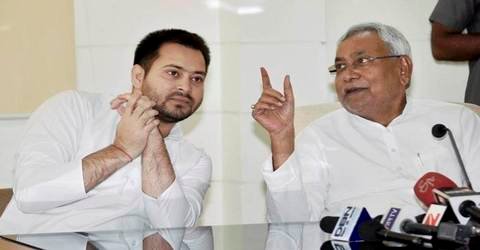
The political mobilization has started against the Chief Minister Nitish Kumar in politics of Bihar. It is the news of Janata Dal United's chief and Bihar Chief Minister Nitish Kumar's most affected. There are reports that Nitish Kumar's power can go. This is the reason that Nitish Kumar has been silent for the time being in the matter of Tejasvi Yadav's resignation from fear of going to the Chief Minister's post.
According to sources, if the government falls down after demanding resignation from Tejasvi Yadav, Nitish Kumar can join the BJP and form the government. But the sources are telling that Nitish's attempt has given a shock to the MLAs of his own party.
According to sources, most of JDU's Muslim and Yadav legislators have decided to adopt a different path instead of going with the BJP.
Virendra Kumar, the only MP from Kerala of the party, shared the hall of the stir within JDU. Virendra Kumar has dismissed reports of coalition with BJP. Also, he ignored the decision to support NDA's presidential candidate Ramnath Kovind by the party in the presidential election.
HT Media has written in reference to a senior JDU leader that if Nitish Kumar gets the support of BJP, then many MLAs from JDU, especially from the Simanchal-Koshi constituency, can choose a different path. That is, the party can split.
Sources reveal that most of JDU's Muslim and Yadav MLAs are strictly against any kind of coalition from the BJP. In such a situation, if Nitish Kumar tries to join the NDA by breaking the alliance, he may have to face the most challenges in his own party and Nitish Kumar's chief ministrial post can be go.
Sources reveal that JDU's senior leader and former president Sharad Yadav is not even inclined towards BJP. If Nitish Kumar does not disagree with the BJP even after this, then his party can be divided.
It is believed that in the event of joining the NDA, about 20 MLAs out of 71 can go against Nitish. Six of JDU's 12 MPs can also make similar rebellions.
According to HT Media, Sarfaraz Alam, Mujahid Alam, Sarfuddin Alam and Naushad Alam are some names that can revolt with Nitish in the case of JDU joining the NDA.
For the last few days, Tejasvi Yadav's resignation is being seen tension between the two parties RJD and JDU. While JD (U) had demanded cleansing of CBI allegations in the case of Anonymous property from Tejasvi Yadav, RJD had clearly stated that Tejasvi Yadav would not resign from the post.
In the meantime, on Tuesday evening, there was a discussion of about 45 minutes of political situation prevailing between Chief Minister Nitish Kumar and Deputy Chief Minister Tejasvi Yadav.
In India, the number of people who believe in Buddhism is close to 84 lakh, in which 87 percent people have made a change of religion. Most of the people who adopt Buddhism by turning religion into a dalit community who became Buddhists to avoid the caste oppression of Hinduism. The remaining 13 percent of the Buddhist population comes from the traditional Buddhist community living in the Northeastern states and areas of the Northern Himalayas.
Those people who adopt Buddhism, are called neo-Buddhists and this neo-Buddhist community is in a better position from today's Hindu Dalit community in terms of literacy rate, job share and gender equality. This has been revealed in the analysis of the figures of census 2011 by India Spend.
In India, 87 percent of Buddhist community is converted to a Buddhist population, and most of it comes from the Hindu Dalit community, on the basis of which it can be said that the development of people of Buddhism is actually the development of a dalit community.
In India, the literacy rate of those who believe in Buddhism is 81.29 percent, which is more than the national rate of 72.98 percent. At the same time, literacy rate among Hindus is 73.27 percent, while the literacy rate among scheduled castes is much below 66.07 percent.
Sattpal Tanwar, leader of the Bhim Army, accused of communal violence in Saharanpur on May 5, 2017, says, "Most of the top-level Dalit leaders present in the organization are Buddhists."
Bhim Army had been discussing in the past due to the large number of Dalits turning the religion of Buddhism. Tanwar says, "That's because Buddhist religion gives confidence to him rather than caste system."
Literacy in Chhattisgarh is 87.34 percent in Buddhist population, while Maharashtra has 83.17 percent and Jharkhand has 80.41 percent.
Significantly, the highest number of Buddhists to be converted into religion is in Maharashtra, followed by Madhya Pradesh, Karnataka and Uttar Pradesh.
The example of Maharashtra in this case is the most unique. 5.81 percent of the total population of Maharashtra is Buddhist, whose total population is close to 65 lakh and Maharashtra is ahead of all states in this case.
It is noteworthy that the Indian Constitution Maker B. R. Ambedkar was a resident of Maharashtra and in 1956, he converted to religion with only 60,000 supporters in Maharashtra and adopted Buddhism.
This kind of protest against caste system continues to this day, although the number of people who have converted to religion has definitely declined. Literacy among the Buddhist community in Uttar Pradesh is 68.59%, which is higher than the state's average literacy (67.68%) and is much higher than the literacy of Scheduled Castes (60.88%) living in the state. The literacy rate of women (74.04%) in the Buddhist community is also good, which is much better than the 64.63 literacy rate of women in the whole country.
In 2011, there was 965 sex ratio on 1,000 per people between Buddhist community, whereas sex ratio was 945 between Scheduled Castes across the country, while National level of sex ratio was 943.
Professor Nitin Tangade of Savitribai Phule University of Pune said, "Due to lack of agricultural land or the lack of traditional profession, the Dalits of Maharashtra chose the path of education to get jobs. Therefore, in pursuing education and moving towards the cities, they are ahead of other communities."
A tax system, GST i.e. goods and service tax, has been implemented since July 1, all over India (excluding Jammu and Kashmir). GST Council divided all the goods and services into four tax slabs (5 percent, 12 percent, 18 percent and 28 percent). GST Council has kept 12011 items in these four categories.
About 80 items useful for the general public will be taxed on zero. Cigarettes, Alcohol, Electricity and Petroleum Products (Petrol, Diesel etc.) are now excluded from GST.
But in addition to implementing GST, one step of the Modi government has hit the common man with double slaps. In fact, after GST, banking services have become expensive, as it had to pay 15 percent tax, while 18 percent tax has been decided in GST.
I.e. services like demand draft, fund transfer from July 1 have become expensive Similarly, insurance premiums of term policies, endowment policies and ULIPS etc. have also become expensive.
Apart from this, the telephone bill will be 18 percent instead of the existing 15 percent, so the bill will also get more.
On the other hand, Modi Government has given a shock to the small investors and the interest paid on the Public Provident Fund (PPF) account, the Kisan Vikas Patra (KVP) and the National Savings Certificate (NSC) under the Small Savings Scheme has cut in.
On 30th June, the government has cut interest rates on 10 basis points on these small investments. Now, PPF and NSC will get 7.8 percent interest, while KVP will get 7.5 percent interest. Apart from these, the interest rates of Senior Citizens Savings Schemes and Sukanya Samridhi Yojana have also been revised. This system has also been implemented since July 1.
It means that you have to pay more for the services and the money you are investing for the savings, you will get money at a lower rate of interest.
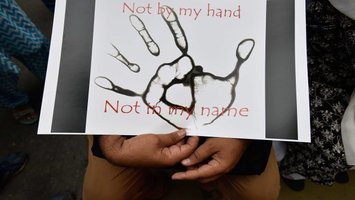
The case of violence related to cattle has increased very fast after the formation of the government of the Bharatiya Janata Party led by Narendra Modi at the Centre. According to the data website India Spend report, between the years 2010 to 2017, 57 percent of the victims were muslims in the violence related to the cattle. During this period, 86 percent of those who died in the violence related to the cattle were Muslims. In these eight years, 63 incidents took place, in which 28 Indians lost their life. 97 percent cases of violence related to cattle have occurred after the arrival of the Narendra Modi government in the centre. Narendra Modi took over the power of the centre in May 2014. India Spand has done this analysis based on data till June 25, 2017.
On Thursday (June 29th) Modi said in Ahmedabad of Gujarat that murder can not be accepted in the name of cow-worship and no one has the right to take law in his hand.
During this period, 24 of the 28 people who were killed in the case of violence related to the cattle were 24 Muslims (about 86 percent). In these incidents 124 people were injured. More than half the cases of cow-related violence (about 52 percent) were due to false rumors.
According to the report, cases related to the crime given by the Central Government or the state government are not shown separately in the cases of violence and murder done by cattle or crowd. In 32 out of 63 cases of violence related to cow were registered in BJP ruled states. There were eight cases in the Congress ruled states. The rest of the cases were held by other parties ruled states.
According to the report of India Spend, in the year 2017, there has been unprecedented increase in cases related to cow related violence. In the first six months of this year, 20 cases related to the cow were more than two-thirds of the total violence in 2016. From year 2010 to this year, the highest number of violence related to cattle was done in the year 2016. These cases include cases of attack by the crowd, attacks by cow guards, assassination, attempt to murder, harassment, gang rape etc. In two cases the victims were tied with chains and nude and beaten. The victims were hanged in two cases.
Most of the cases of violence related to cattle were recorded in Uttar Pradesh (10). After that, registered in Haryana (9), Gujarat (6), Karnataka (6), Madhya Pradesh (4), Delhi (4) and Rajasthan (4). Of these, 21 percent of cases were registered in south or eastern India (including Bengal and Odisha). In the North-Eastern India, only one case of violence related to cattle has been recorded. After coming to power of BJP, on April 30, 2017, two people of Assam were murdered in a dispute over the cattle.
In the last eight years, 61 out of 63 cases of cow-related violence were made after the formation of the Narendra Modi government in the centre. In the year 2016, 26 cases of violence related to cattle were registered. So far 20 cases of such violence have been registered till June 25, 2017. There is no information about the arrest of the accused in nearly five percent cases. In the same 13 cases (about 21 percent), the police registered cases against the victims.
In India, Modi Government's Union Finance Minister Arun Jaitley has said that the government will disinvestment Air India. I.e. will sell their share. The government is agree on it in priciple. The panel will be created for further processing.
After the cabinet meeting on Wednesday, Jaitley gave this information to the reporters. The loss of Air India is steadily rising and despite all efforts, it can not be controlled. Opposite the government is continuously giving some financial assistance to air travel to some people from the public money. In such a situation, demand for disinvestment has been rising for a long time.
Let Air India's financial position worse than 2007. In 2007, Air India and Domestic Airlines Company Indian Airlines merged with the National Aviation Company Limited. After this merger, the liability of the two companies came on National Aviation Company Limited. In 2010, the name of National Aviation Company Limited was changed to Air India Limited. Since 2007, the airline's economic status has been negative. A plan was prepared to deal with this situation under which the government will has charging Rs 42,182 crore in the airline company within 22 years. However, this investment has been delayed.
In the last five years (FY 2012-2016) where an equity plan of Rs 22,609 crore was to be made, it so far only got Rs 22,280 crore. In such a situation, the Central Government has taken a decision to sell the stake in Air India, which is in debt in the Cabinet meeting.
According to reports, the company is facing a loss of about Rs 52,000 crore.
The government is estimated to earn around 25-27 thousand crore from this disinvestment. Air India's share in the domestic market is around 14%, which is much lower than IndiGo and Jet Airways. Significantly Air India started in 1932 by Jamshed Tata, which was nationalized in 1948.
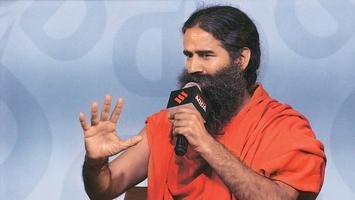
After failing in the product quality test in India, Patanjali products have also suffered a major setback in neighboring country Nepal.
According to the news, six medical product of Patanjali Ayurveda has failed in lab tests in Nepal. After failing in the quality test, the government has immediately stopped the consumption of Patanjali products in Nepal.
Nepal's Health Ministry has asked Patanjali to send back six of its products to India. On the other hand, the Nepal government has requested shopkeepers not to sell these products in the country. The six medical products that fail in the test include Divya Gashir Churna, Bakuchi Churna, Amla Churna, Triphala Churna, Adivya Churna and Aswagandha Churna.
According to sources, the product quality test of seven products was done in which only one product could get green signal for selling in Nepal.
Recently Kanak Mani Dixit tweeted that Amla Churna of Patanjali Batch number AMC067, Divya Gashar Churna Batch number A-GHCI31, Bakuchi Churna Batch number BKC 011, Triphala Churna Batch number A-TPC151, Aswagandha Batch number AGC 081, Adivya Churna Batch number DYC 059 have failed in microbial test.
Earlier, according to information received under Right to Information (RTI), several products of Baba Ramdev's company Patanjali failed in the quality test performed by a lab in Uttarakhand.
According to the report of Hindustan Times, this information was given in response to the information received under Right to Information (RTI). According to this, about 40 percent of Ayurveda products, including Patanjali's products, were not found in accordance with the standard in Ayurveda and Unani offices of Haridwar.
Out of 82 samples gathered between 2013 and 2016, 32 products could not pass quality test. Patanjali's 'Divya Amla Juice' and 'Shivalingi Seed' are among those products which were not found according to quality standards.
Let me tell that the canteens of the army last month banned Patlaji's Amla juice. This action was taken by the Army on the failure of Patanjali's product in a quality check conducted by the West Bengal Health Laboratory.
According to the Lab Report of the Uttarakhand Government, the pH quantity was less than the limit fixed in Amla juice. Acidity and other health problems arise when pH is less than 7.
It was also learned from the reply of RTI that 31.68 percent of Shivlingi seed was foreigner. However, Balkrishna, managing director of Patanjali and Ramdev's associate has dismissed the Lab report. In a conversation with HT, he said, "Shivlingi seed is a natural seed. How can we tamper with this?''
Consumer Complaint Council (CIC) of the Advertising Standards Council of India (ASCI) has observed that 98 products including Patanjali's Dantakanti Toothpaste, Patanjali Juice and Amul Epic Choko ice cream confuse customers.
One of America's top magazines has questioned the decision to note ban of Indian Prime Minister Narendra Modi. Magazine has claimed in its report that due to the disruptive use of the note ban on Prime Minister Modi, the economy of India has come to a halt.
It was also stated in the report that due to the cash-based economy of India, Modi's decision has been the biggest loss in the history of Indian economy.
Let me tell you that PM Modi announced the November 8 (2016) out of 500 and 1000 notes in the country.
Foreign Affairs Magazine quoted Writer James Crebatree in his latest edition, "The note ban proved that it was the most harmless experiment." Modi administration should now learn from his mistakes."
Senior research fellow Crebatree in Singapore's Lee Kuan Yu School of Public Policy NUS has been criticizing the note ban in India.
"The economic achievements of PM Modi are correct, but the change that has brought him growth has disappointed people in a way. The government has worked on a large scale for the note ban. He did not make much impact on the economy. Looking at the elections of 2019, the Modi government needs to learn from its previous step."
Crebatree further writes, "The truth is that in short intervals, the note ban of Modi is worthless in terms of growth. Last week, India released GDP data for the first quarter of 2017. This is the time when the note ban was most affected during this period."
It was further stated in the report that crores of people had to spend 500 and 1000 notes in cash machines and bank long queues. In the meantime, poor sections faced the most problems. Commercial activity stagnated in India's cash-based economy.
A sting operation by private TV channels has claimed that many Tamil Nadu MLAs got cash and gold to vote during the trust vote. In the shared sting operation of Times Now and Moon TV, claims have been recorded to record statement of MLAs with intelligence cameras.
According to Times Now report, these sting operations began in April and continue in June after May. Chanel has claimed that on 18 February 2017, there was a transaction of money in the Tamil Nadu Legislative Assembly to gain a vote in the confidence motion.
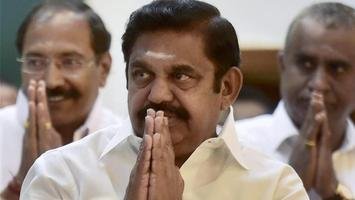
E. Palaniswamy took oath of Chief Minister of Tamil Nadu on February 16. Palaniswamy took the place of O Panneerselvam.
After the death of J. Jayalalitha, the former Chief Minister of Tamil Nadu and AIADMK general secretary, her party was divided into two factions. During Jayalalitha's illness, senior party leader O Panneerselvam was made the chief minister of the state. Later, there was a crack in his relationship with Jayalalitha's associate Shashikala Natarajan. After Shashikala becoming the General Secretary of party, she made E Palaniswamy the Chief Minister.
Around 100 MLAs were kept in a resort for winning of Palaniswamy in the confidence vote.
According to the sting, two MLAs of Madurai South legislator Sarvanan and MLA of Solur, Kanakraj, admitted in front of the intelligence cameras that they had taken money to vote during trust vote.
Sting has claimed that the legislators were also threatened.
In the sting, a legislator has alleged that every MLA was given two to six crore rupees to vote during the trust vote.
The MLA claimed that some people were given gold due to lack of cash.
DMK leader MK Stalin has also complained about the disturbances in the confidence motion.