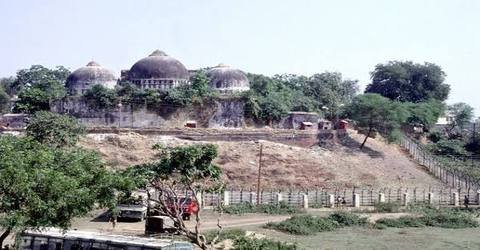
After the Supreme Court's verdict in the Ayodhya dispute in India, discussions about the five-acre land given to the Sunni Waqf Board are getting heated.
On one hand, there is pressure on the Sunni Waqf Board not to take this land, on the other hand there is a discussion that where will this land be found?
There are also voices of disagreement between Muslim communities and organizations in this matter.
While the Sunni Waqf Board announced its decision to accept it soon after the verdict and not challenge it further, which was also supported by many Muslim religious gurus, the All India Muslim Personal Law Board prepared to challenge the Supreme Court's decision has been doing.
The Personal Law Board has been an advocate on behalf of the other parties in the dispute.
The All India Muslim Personal Law Board is going to hold a meeting in Lucknow on 17 November in which it will be decided whether to challenge it further or to take any further step on the decision of the Supreme Court.
Board member and lawyer Zafaryab Jilani says, "What we have to say is that the Muslim side had not asked for land from the Supreme Court at any other place. We were asking for the mosque land back at the disputed site. If we had filed a reconsideration petition, this point will also be included in it.
At the same time, there is also a discussion in the Muslim community whether the Sunni Waqf Board should accept this proposal of the Supreme Court.
The discussion was initiated by AIMIM leader Asaduddin Owaisi, who is being supported by many more people.
Owaisi categorically described it as a bailout and said, "Muslims of India are so capable that they can buy the land and build a mosque. I believe that the Sunni Waqf Board should reject this proposal."
At the same time, Sunni Waqf Board Chairman Zafar Farooqi does not listen to Owaisi's point but says that it will be decided after the Waqf Board meeting.
Talking to the BBC, Farooqui says, "We are calling a board meeting soon and will decide in it whether or not to accept these offers of the Supreme Court. If the board accepts this land then only it will be decided that what will be built on five acres of land, Mosque or something.''
"The central and state government has to decide where the land will be given, we will not demand to give land in a particular place, but the government can give this land only in the acquired place."
However, in the Muslim community, there is a special discussion about where this five-acre land will be finally found, because it is not clear in the order of the Supreme Court.
On the other hand, some Hindu organizations are still insistent that no land will be allowed to build a mosque within Ayodhya.
A Hindu organization official, on the condition of anonymity, said, "Five acres of land can be given outside fourteen Kosi. If the government tries to give this land around the birth land in Ayodhya, then the Hindu organization will take the streets against it."
"There is no question of giving it in the area of the acquired land because it can again create controversy in future."
But in conversation with some Muslim youths of Ayodhya, it was felt that even if they are not happy with the decision, if the land is found inside the acquired premises, then perhaps they will be lessened by this decision.
Bablu Khan, a resident of Ayodhya, says, "The Supreme Court has decided, justice has not been done. We cannot do anything in it now but if land is found at the same place then the mosque can be rebuilt."
Some other people of the Muslim community are also demanding that this land should be found in the same area of 67 acres, which was acquired by the central government.
Meanwhile, there is a discussion on whether Muslims should rebuild the mosque on the land given to them by the government?
It is being told that the government can give land anywhere in Ayodhya to build a mosque.
Some Hindu organizations may oppose giving land within Panchkosi or fourteen Kosi border, but the government may not have any problem in this because now the scope of Ayodhya has also increased considerably.
Earlier Ayodhya was just a town, but now the name of Faizabad district has become Ayodhya. So was this strategy behind changing the name of Faizabad district to Ayodhya!
India has decided not to join the proposed Free Trade Agreement RCEP, the Regional Comprehensive Economic Partnership of ASEAN countries.
The Government of India says that it had concerns on some issues about joining the RCEP, which has been taken in the interest of the country due to lack of clarity.
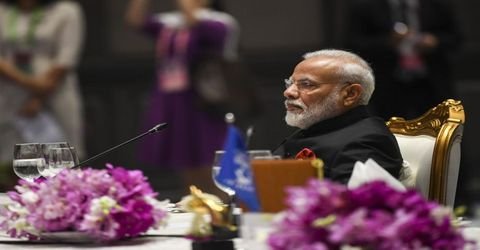
India's Prime Minister Narendra Modi has called it a decision on 'the voice of your soul', while the Congress is presenting it as its victory.
On Monday, when Narendra Modi attended the RCEP conference in Bangkok, all eyes were on whether he would involve India in this agreement or not.
It was believed that India would sign this trade agreement and many farmers and business organizations were protesting about this.
But in the evening after the RCEP conference, the Secretary (East) of the Ministry of External Affairs of India, Vijay Thakur Singh said that India has decided not to join the RCEP keeping in mind the national interest due to conditions not being favorable.
He said that it was not possible to get involved because of India's issues and concerns regarding RCEP.
He also read the statement given by Narendra Modi at the conference, in which he spoke about taking this decision due to Mahatma Gandhi's Jantar and his conscience.
Vijay Thakur Singh said, "Commenting on this subject, the Prime Minister said that he has taken this decision by thinking about the impact on Indians and especially the weaker sections of society and their livelihood. Mahatma Gandhi's advice to the Prime Minister Thought of, in which he said that remember the face of the weakest and poorest person and think that the steps you are going to take, those To him will be of any use or not.''
"India participated in the discussions of RCEP and negotiated strongly with its interests. Under the current circumstances we feel that it is the right decision for India not to enter into an agreement. We will do business, investment with the region And will continue to strengthen people's relationships.''
RCEP is a trade agreement, which makes it easier for its member countries to do business with each other.
Under this agreement, member countries either do not have to pay tax on import-export or they have to pay very little.
In addition to 10 ASEAN countries, RCEP included India, China, Japan, South Korea, Australia and New Zealand. Now India will stay away from it.
RCEP has been raising concerns in India for a long time. Farmers and merchant organizations were opposing this saying that if India joined it, the already troubled farmers and small traders would be devastated.
Swaraj Party leader Yogendra Yadav, who is associated with the All India Kisan Sangharsh Samman Samiti, termed India's decision to stay out of the RCEP as important and said that the Prime Minister has respected the public opinion.
Yogendra Yadav said, "A very big and serious decision. And a very good decision. The Government of India and the Prime Minister should be congratulated for this."
"Joining the RCEP could have become a matter of great crisis for India's farmers, for India's small traders."
"This could have resulted in worse consequences later. All kinds of questions were being raised about it. The government went ahead despite all these questions. It seemed that he would go and sign it. But finally honoring public opinion, the Prime Minister decided not to do so. Overall, the decision was made in the national interest.
Yogendra Yadav said that all the farmer organizations of the country had opposed this agreement in one voice. Farmers' organizations associated with BJP and RSS were also among those protesting.
He says, "Even Amul Dairy, considered close to the government, had opposed it. The BJP's own ministers had criticized it vocally. Many state governments had questioned it. A few days ago The Congress had opposed this by changing its policy and taking Utern. All these things will be in the Prime Minister's mind somewhere and he will realize that by coming back this agreement of the country To bring the variation will be no easy task.''
Yogendra Yadav says that this agreement would have disastrous consequences on two-three classes. According to him, if India had reached this agreement, the entire milk industry of India would have come to a standstill due to the import of milk powder from New Zealand.
Talking of farmers and agriculture, the prices of coconut, pepper, rubber, wheat and oilseeds were in danger of falling after this agreement. The business of small traders was in danger of collapsing.
He says, "The Prime Minister must have felt that there has been a slowdown in India's economy on one side, the country has not yet emerged due to the demonetisation. Overall the condition of the country's economy is bad and if there is another setback So the government will be held responsible for it, in such a situation it will be very difficult for the government to stand before the people. All these things must have been in the mind of the Prime Minister.''
The high-level advisory group of the central government, giving its opinion about RCEP, had said that India should join it.
This group said that if India stays outside RCEP, then it will be out of a big regional market.
On the other hand, the producers and farmers of India were concerned that India's experience of free trade agreements has not been good before and the countries with which India will join RCEP, India imports more and exports less.
At the same time China is more supportive of RCEP, with which India's trade deficit is already high. In such a situation, RCEP can worsen India's position.
Crisil economist Sunil Sinha told the BBC that RCEP was being discussed for a long time, but India decided to stay away from it, seeing that it could lead to less, more damage.
Sunil Sinha said, "The most important thing in such agreements is what is the benefit of such cooperation for any country. But RCEP was opposed in the country and it was being said that it was for India Is not much beneficial.''
"I think that when this was discussed, the Indian authorities felt that the more benefit India would get, the more damage it would do." For this reason India would have refused to move forward on this agreement. ''
Sunil Sinha says that as far as China is concerned, it is already an economically prosperous country and it has more reach in East-Asian countries than India.
He said, "Whenever such business negotiations take place, China will be in a position of advantage here, whereas India does not have that advantage."
"We don't have that kind of business relationship with East-Asian countries. India is trying to be part of that regional cooperation, while China has already reached there.''
Apart from the economic aspect, politics has also started in this matter. While the Bharatiya Janata Party is describing it as a visionary decision of the Prime Minister, the Congress is promoting it as its victory.
Terming the Bharatiya Janata Party's acting national president Jagat Prakash Nadda not joining the RCEP, he congratulated the Prime Minister for not bowing to global pressure like earlier Congress-led governments.
But Congress spokesperson Randeep Surjewala, who is already opposing joining the RCEP, has tweeted that it is a victory for those fighting to protect the national interest. He has credited the opposition of Congress and Rahul Gandhi for India's move not to join the RCEP.
Aramco, the world's highest profitable company, has confirmed to launch an IPO to enter the stock market. It may be the world's largest initial public offering.
The Saudi Arabian oil company said on Sunday that it had planned to be listed on the Riyadh Stock Exchange.
The company, owned by the Saudi Arabian royal family, will decide the IPO launch price according to investor registration and interest.
Business sources believe that one or two percent of the company's existing shares can be made available.
Aramco is said to be worth $ 1.3 trillion ($ 927 billion).
The company said that at present it has no plans to enter the foreign stock market.
Yasir al-Rumyan, chairman of the Aramco board, said at a press conference, "We will tell you about the future of the international stock market."
The history of Saudi Aramco dates back to 1933, when a deal was struck between Saudi Arabia and Standard Oil Company of California (Chevron).
The deal was related to the formation of a new company for exploration and excavation of oil wells. Later, between 1973-1980, Saudi Arabia bought the entire company.
According to the Energy Information Administration, Saudi Arabia has the largest oil reserves after Venezuela. Saudi Arabia is second only to the US in oil production.
In terms of oil, Saudi Arabia also gets priority over the rest of the countries because it has a monopoly on oil in the entire country and extracting oil here is also relatively cheap.
According to David Hunter, director of market studies at Shenderr Electric (Energy Management Company), Aramco is definitely the largest company in the world.
"It is bigger than all the other oil and gas companies," said Shender.
If you compare with some big companies of the world, in 2018, Apple's revenue was $ 59.5 billion. Along with this, other oil companies Royal Dutch Shell and Exxon Mobil are also far behind in this race.
It is the world's largest oil company with a production of 10 million barrels per day and earning US $ 356,000 million.
Reliance Industries Chairman Mukesh Ambani has announced to sell 20% of his oil company's shares to Aramco. This will be Aramco's largest foreign investment ever in India.
Chief market analyst Chris Baun at IG Group says that there are risks to investing in Aramco. There are also strategic and political risks to the company.
These threats were also revealed in September this year when Aramco-owned plants were attacked. In Saudi Arabia, two of the company's plants were attacked by drones, which caught fire and caused a lot of damage.
However, the company's chief executive Amin Nasser described the company's plans as 'historic'. He said that Aramco is still the most reliable oil company in the world.
On the occasion of the IPO launch, Aramco was told that the recent attacks will not affect its business, financial condition and operation.
Middle East affairs expert Qamar Aga told the BBC, "American and European investors are not keen on taking risks due to economic slowdown and lack of money in the market. Investors are also skeptical about Saudi Arabia's role in the ongoing war in Yemen.''
The Saudi-led coalition has waged a struggle against the Houthi rebels in Yemen for nearly four years. The Huti rebels also claimed responsibility for the attack on Saudi oil plants in September. But the US and Saudi Arabia held Iran responsible for the attack.
According to Qamar Aga, an important question is also how much oil reserves are left with Saudi Arabia because it is decreasing day by day. Secondly, there is a considerable consumption of oil in Saudi's domestic market as well.
There was a time when Aramco was considered a mysterious company but in the last few years it has completely transformed itself. Today the company has prepared itself carefully for where it has reached.
The company has to spend many years preparing for this. According to Forbes magazine, "In 2016, Aramco did not even have accounting books according to international standards. Neither did he have formal records of institutional charts and structures.''
Aramco has started publishing its economic data since the drone strikes in September. The company now also regularly conducts question-and-answer programs for journalists. Not only that, Aramco had also taken journalists to the drone attack site.
The company has appointed women for some top positions. International concerns have also been mentioned by the company announced on Sunday.
The company has said that its objective is to recycle crude oil for a long time. Introducing accountability towards the environment, Aramco has said that it will reduce the damage to the environment by using modern technology.
The company has said that the local people, even divorced women, will be able to buy its shares and they will be given a bonus for every 10 shares.
Saudi Arabia wants to sell Aramco's shares because it wants to reduce the economy's dependence on oil.
Crown Prince Mohammed bin Salman, through his 'Vision 2030', wants to take the country's economy to different regions.
According to David Hunter, Saudi Arabia also wants to get ahead in the production of solar energy by using its vast desert.
Hunter says, "The situation is politically complex for Aramco at the present time. The main reason for this is the killing of Saudi Arabian journalist Jamal Khashojji in the last year. Saudi Arabia's record in human rights is not good, so anything related to it Is viewed with suspicion. ''
Another difficulty may be in Mohammed bin Salman's plan, this time there is a worldwide campaign against fossil fuels.
David Hunter says, "It may be difficult for Aramco even further because the trend of investors is decreasing from fossil fuels at the moment and they are looking for new options."
Qamar Aga feels that there are many positive aspects of Aramco, but it will have to wait to see how many investors will be able to attract them.
Aga says that if the company fails to pull investors, then it will have the most impact on him and Saudi Arabia.
Abhijeet Banerjee, Esther Duflo and Professor Michael Kramer of Harvard University received the prestigious Nobel Prize for Economics of 2019, and this news rose to prominence in the Indian media.
Abhijeet Banerjee was born in India and educated up to the master here. There was also a good discussion about Banerjee studying in JNU. This is also because JNU has been targeted by many BJP leaders.
Abhijeet Banerjee has been critical of the Modi government's decision on demonetisation and helped prepare the Congress Party's manifesto in the 2019 general election.
The justice scheme was the idea of Abhijeet Banerjee in the Congress manifesto. Under the justice scheme, the Congress party had promised in the 2019 general election that if it forms the government, it will transfer 72 thousand rupees to their account every year to the twenty percent of the poorest families in the country. However, the Congress lost badly in the elections.
The Government of India had a very cold reaction when Abhijeet Banerjee received the Nobel. However, Prime Minister of India Narendra Modi gave a formal congratulation on Twitter. But Piyush Goyal, Minister of Railways and Commerce, Government of India, commented on Abhijeet Banerjee was the most discussed.
Piyush Goyal had told reporters on Friday, "We congratulate Abhijeet Banerjee for winning the Nobel Prize." But you all know that he is completely with the leftist ideology. He had helped Congress formulate a justice plan but the people of India completely rejected it. ''
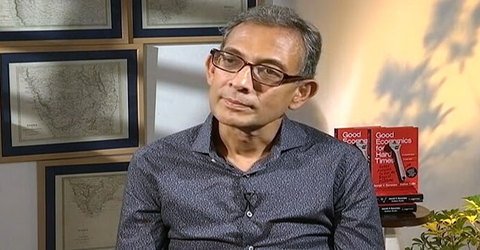
Abhijit Banerjee has reacted to this comment of Piyush Goyal. Abhijeet is in Delhi to launch his new book 'Good Economics for Hard Times: Better Answer to Our Biggest Problems'.
When asked about Piyush Goyal's remarks in Delhi, he told NDTV, "I think such a comment will not help." I have received a Nobel for my work and nothing will be gained by making them question my work. If the BJP will also ask questions on economics like the Congress party, will I not tell the truth? I will tell you the truth. I am a professional so for everyone. I am not there for any special party. My understanding of the economy will not change according to the party. If anyone asks me a question, I will not question the purpose of asking him questions. I will answer those questions. ''
Abhijeet said, "I have worked with many state governments in India. BJP also has governments in this. I have worked closely with the Pollution Control Board in Gujarat. The then Chief Minister of Gujarat was Narendra Modi and my experience then was very good. At that time I was not seen as a political person but as an expert and he also implemented those policies. I am a professional and I am the one who does this for everyone. I have also worked with Khattar in Haryana. ''
Congress leader Rahul Gandhi has targeted the Modi government by tweeting about Commerce Minister Piyush Goyal's comment on Abhijeet Banerjee. Rahul tweeted and said, "Dear Abhijeet Banerjee, hatred has blinded these stubbornness. They have no idea what a professional is. You will keep trying for decades but will not understand this. It is certain that millions of Indians are proud of your work.
Talking to reporters at MIT after receiving the Nobel, Abhijit Banerjee had said that sticking to the fiscal deficit and inflationary balance will not slow the Indian economy. What does this mean after all?
In response to this question, Abhijeet told Hindustan Times, "I don't think it's any rocket science. I am saying this only on the basis of the evaluation of what is happening in the Indian economy. The sluggishness in India's economy is due to a decrease in demands. If we do not have money, we will not buy biscuits and the biscuit company will be closed. I think demand should increase. Meaning people have money to spend it. This is what the Obama government did in America. It has nothing to do with ideology. The sluggishness in India's economy is due to the decrease in demands. ''
Abhijeet Banerjee's book states that India is following such policies to achieve rapid growth rate, which is increasing the difficulties of the poor. what does it mean?
In response, Abhijeet Banerjee said, "This has happened in many countries. What happened in America and Britain? When the growth rate of these countries declined in the 1970s, it could never recover. They had no idea why this decline was there? Then it was said that more tax and more redistribution is responsible for it. These were later cut down. It was a Reagan and Thatcher-style economy. ''
Is India's economy growing in this direction?
In response, Abhijeet said, "No, I am saying that this is the natural reaction of governments in such a decline. We are saying that we should be warned that such policies did not help America and Britain. Rather, these policies have increased inequality. These policies give a boost to the economy which is trumping and which gives a breeze to Breguet. ''
So what needs to be done to get the Indian economy back on track?
In response, Abhijeet Banerjee told Hindustan Times, "I am not a macro economist. But if I were a policy maker, I would have collected data extensively. After this, if I reached the decision that this is a demand based problem, then I would have given enough money in the hands of the poor. This is something in which I fully believe. The Obama administration did the same thing. This is not a new thing.''
The International Monetary Fund has said that India has worked on the fundamentals of the economy but there are some things that need to be worked on for long-term development.
Kristalina Georgieva, managing director of the IMF, told reporters in Washington on Thursday, "India has worked on the fundamentals of the economy but there are some problems that need to be addressed. The banking sector in the financial sector, particularly non Banking institutions need to be reformed.''
The IMF in its latest report of the World Economic Outlook on Tuesday lowered India's growth forecast to 6.1 percent, reducing it to 0.90 basis points.
This is the third time this year IMF has cut the growth rate of the Indian economy.
In the month of July itself, the IMF had estimated the Indian growth rate to be 7 percent in 2019-20, while in April this year it was said to be 7.3 percent.
However, IMF has also hoped to improve it in 2020-21.
Economist Kristlina Georgieva of Bulgaria became head of IMF at the end of September. These figures are the first time since Christlina came to this position.
Georgiwa said, "India has to continue to work on the things that are necessary to maintain the pace of development for a long time. At the same time, Georgiwa said that the Government of India is working to improve the economy, but India will have to rein in its fiscal deficit.
However Georgiwa said, "The growth rate in India has been very strong in the last few years and the IMF is still forecasting very strong growth for it."
India's Union Finance Minister Nirmala Sitharaman has also received a statement on the International Monetary Fund's growth rate of 6.1%.
Sitharaman, who arrived in Washington to attend the annual meeting of the IMF and World Bank, said, "India is one of the fastest growing economies in the world and IMF may have lowered the growth rate estimates, but now Also India's economy is growing at the fastest pace.
Nirmala Sitharaman also said, "I want it to grow faster. I will do everything possible for this, but the truth is that India is still growing comparatively fast."
On Tuesday itself, the International Monetary Fund (IMF) said that "the world economy is looking so sluggish for the first time since the financial crisis a decade ago.''
In its report on the Indian economy, IMF said, "India's economic growth rate estimates has decreased due to the weakness of some non-banking financial institutions and the negative impact on the ability of consumers and small and medium scale businesses to borrow."
According to the IMF, "The reason for the ever-decreasing growth rate is the weaker domestic demand than expected. Investing in human capital should be India's top priority. There is a need to continuously increase the number of women in the workforce. It is extremely important. India Women are very talented but they stay at home.''
The Monetary Fund has estimated that the entire world economy will grow by only 3 percent this year, but it is expected to be 3.4 percent in 2020.
The IMF also stated, "The global economy is in a phase of sluggishness and we are once again reducing the growth rate of 2019 to 3% which is the lowest ever since the crisis of a decade ago.''
This is lower than its July global growth rate estimate. In July, it was reported to be 3.2%.
The IMF said, "The decline in economic growth rates is the main reason behind the decline in manufacturing and global trade, increase in import taxes and demand for production."
The IMF said, "To deal with this problem, policy makers will have to end trade disruptions, resume work on agreements as well as reduce uncertainty among countries, along with reducing uncertainty in domestic policies."
The IMF believes that due to the slowdown in the global economy, the growth rate in the 90% countries of the world will be less this year.
The IMF said that the global economy could grow to 3.4% in 2020.
However, it has also warned of many dangers as this growth depends on the economic recovery in India as well as the economy of Argentina, Turkey and Iran currently facing severe crisis.
He said, "Any wrong policy at the moment, such as no-deal Brexit or deepening trade disputes, can create serious problems for development and job creation."
According to the IMF, in many cases the greatest priority is to remove uncertainty or threats to development.

During the Cold War, some people considered extremely serious in Saudi Arabia called Russian leaders 'Godless Communists'.
It was unimaginable then that a Russian leader would have been wholeheartedly welcomed in Saudi Arabia but things have changed a lot now and this week Russian President Vladimir Putin was given a strong welcome there.
He was given a salute of 12 guns. King Salman bin Abdul Aziz Al Saud and Crown Prince Mohammed bin-Salman were also present at the ceremony.
The US left the Kurds in northern Syria. Subsequently, Saudi Arabia entered into several bilateral agreements with Russia and also reviewed the regional situation.
So, is Saudi Arabia now approaching Russia? What is the main reason for this?
Russia's President Putin visited Saudi Arabia for the first time in his 12-year term. The tour was as unprecedented as it was widely publicized.
He was accompanied by a large delegation of trade, security and defense officials, who signed bilateral deals worth $ 2 billion and more than 20 agreements were announced in the meantime.
Saudi Arabia also invited Russia to join the ongoing international investigation into the drone strikes on the state oil company Aramco on 14 September.
In defense matters, there was also potential discussion on the purchase and future deployment of Russia's air defense missile S-400, which is a diplomatic setback for the US.
When Turkey signed a deal with Russia to buy the S-400 missile defense system in 2017, the US said that if Turkey does so, it will cancel the F-35 warfare deal.
If Turkey went ahead with its deal with Russia in the past, then the US has canceled the F35 deal with it.
Bilateral trade between Saudi Arabia and Russia has increased since June 2018, and global oil prices have risen recently following cooperation between the two to ban oil production.
During this visit of Vladimir Putin, the Russian Direct Investment Fund (RDIF) has also made announcements regarding investment.
All of these indicate a warm-up in relations between Saudi Arabia and Russia, which had been at odds with the Afghan Mujahideen in the 1980s.
So what is the reason behind the growing relationship between Russia and Saudi Arabia?
To put it frankly, today Saudi Arabia is no longer confident of America and the countries of the west as it used to be earlier.
But this also does not mean that he has started trusting Russia. But Saudi Arabian think tanks are rethinking this over the past decade of events in the Middle East.
The biggest setback came from Arab Spring Protest 2011. When US pressure exerted the power of Hosni Mubarak, the President of Egypt for three decades, it took awe in Saudi Arabia and other Gulf kingdoms.
On the contrary, they could not even notice that Russia stands in support of the besieged Syrian President Bashar al-Assad.
The next setback came when the then US President Barack Obama supported the Iran nuclear deal in 2015. Saudi Arabia was very uncomfortable with this. He feared, which is true that the Obama administration is losing interest in the Middle East.
He was delighted when newly elected President Donald Trump chose Saudi Arabia for his first overseas tour in 2017. His relations with the US seemed to be back on track when deals worth billions of dollars were announced.
But in October 2018, Saudi journalist Jamal Khashozzi was murdered by agents of the Saudi government when it was widely criticized worldwide.
The leaders of the West began to distance him from Saudi Crown Prince Mohammed bin Salman's suspected involvement in it. They were isolated at the G20 summit in Buenos Aires. But here Putin met him with great enthusiasm.
Although US President Trump advocated a good relationship with the Saudi leadership, the Arab administration is still disappointed with America's unpredictable and impractical approach to the region.
This week, Saudi Arabia's Ambassador to Britain, Prince Khalid bin Banader, described Turkey's incursion into northern Syria as a 'disaster'.
Asked about the heat in relations with Russia, he said that "Russia understands the countries of the East better than the Western countries."
During eight years of civil war in Syria, Russia has helped save the Assad regime. He not only showcased his modern military weapons but has also spread strategic legs as well.
The US sold military equipment to Saudi Arabia Air Defense, which failed to stop the drone strikes on Aramco on 14 September. Relations between the US and Saudi have been uneasy even after the Khashoji murder case.
Saudi and its Gulf allies are trying to reduce their dependence on the West.
All these events need to be seen in one perspective.
The US is still the main security partner of Saudi Arabia. It began in 1945 with a meeting of US President Franklin Roosevelt and Saudi King Abdul Aziz ibn Saud on an American warship.
When Saudi Arabia guaranteed to maintain its oil supply in the future, the US provided security. But even after that agreement, the situation remained muted.
Today, the US military has bases in all six Arab countries of the Gulf. The fifth fleet of the US Navy, headquartered in Bahrain, is the most powerful army in the region.
When Trump came to Saudi Arabia, a deal worth over $ 100 billion was announced. Only two billion dollar agreements have been signed with Putin this week.
But there is no doubt that the structures of alliances in the Middle East are not only shaken but are undergoing a lot of changes. Russia and China are expected to visit more in Saudi Arabia in the coming time.
America is still a major ally sitting at Saudi's table, but now many more guests are sitting around it.
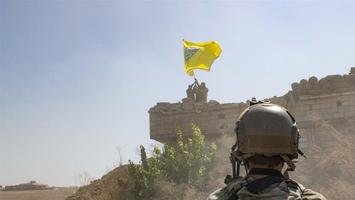
Kurdish forces and the Syrian government have agreed for mutual help amid Turkey's growing military operations. Hours later the Syrian army is heading north of the country to help the Kurds.
According to Syrian government media, the Russian-backed army has entered the city of Tal Tamer, 30 kilometers south of the Turkish border. According to government media, the army has also entered the city of Manbij where Turkey wants to create a safe zone to resettle displaced people from Syria.
The decision of the Syrian government has come after the US announced Sunday the withdrawal of all its troops in Syria, the Kurds' main ally.
The Turkish attack aims to repel Kurdish forces from their border area.
The Kurdish-led Syrian Democratic Forces (SDF) occupied areas of heavy bombing on Sunday. During this time Turkey has found success in the major border cities of Ras Al-Ain and Tal Abyad.
Dozens of civilians and fighters from both sides have been killed in these attacks.
On Sunday, US Defense Minister Mark Asper announced the withdrawal of US troops from Syria. Turkey attacked some areas of Syria just days after President Donald Trump's controversial decision to withdraw US troops from north Syria.
Trump's decision and the Turkish attack have drawn international criticism. The Syrian Democratic Forces have been the main allies of Western countries in the war against the Islamic State in Syria.
And amid this instability, fears are being raised about the re-activation of the alleged extremist organization Islamic State and the escape of its prisoners.
Recently, fighters fighting under the SDF and Kurdish leadership said that if the situation deteriorated due to the attack by the Turkish army, they would not be able to protect the families of suspected militants of the Islamic State militant organization living in the camps.
According to the Kurdish-led administration in northern Syria, the agreement reached on Sunday would allow the Syrian army to move into border areas controlled by Kurdish forces. From here they will be able to help the Kurds against the Turkish attack.
This is the first time since 2012 that Syrian troops will enter these areas. The army, which was supporting President Bashar al-Assad at the time, withdrew from the area to concentrate on dealing with rebels in other areas. Control of this area was given to the Kurds.
Despite disagreeing with the Kurds on many issues, President Assad never tried to retake the region. Especially when the Kurds became partners with US troops in the region in an international alliance against the Islamic State.
Since Donald Trump's decision to withdraw US troops from North Syria, this attack has been carried out by Turkey. In such a situation, the Kurds say that they see the decision of US President Donald Trump to withdraw his army as a hoax.
It is also being said that this step of Trump has given a kind of green signal to Turkey. Turkey considers Kurds to be extremists.
For the moment, the Syrian Army will not be deployed between the cities of Tal Abyad and Ras al-Ain. Apart from Tal Tamer, soldiers have also arrived in Ain Issa. According to government media, people celebrated the arrival of the army, whose pictures have also been broadcast.
There is increasing pressure on Turkey to stop the military operation, but President Richep Tayyap Ardoan has said that the operation will continue. On Monday, he said Turkey would not back down. It doesn't matter what anyone says on this.
Turkey wants to push the Kurds out of the 'safe zone' being built up to 32 kilometers inside Syria. Turkey plans to resettle more than 2 million Syrian refugees, which are currently in Turkey. Most of these are not Kurds.
The Russian government, a close ally of Ardoआनan, said it does not want any possibility of conflict between Russian and Turkish forces in Syria and is in cost-effective contact with Turkish authorities.
Earlier, President Trump said that Kurdish forces may have released prisoners of the Islamic State to drag the US into conflict. He added, "A big ban will be imposed on Turkey".
So far, at least 50 civilians have been killed in Syria and 18 in South Turkey. Kurdish forces have confirmed the deaths of 56 of their fighters.
Turkey says four of its soldiers and 16 Turkish-backed Syrian fighters have also been killed in Syria.
The United Nations Humanitarian Agency said that more than one hundred and sixty thousand civilians have been displaced and this number is expected to increase.
On Sunday, Kurdish officials said that about 800 people belonging to the Islamic State fled a camp in northern Syria.
They reported that the detainees attacked the gate of the displacement camp at Ain Issa. A fight is going on near this area.
According to the Syrian Democratic Forces, the camp has housed about 12,000 Islamic State-related suspects in seven prisons, of which about 4,000 are foreign women and children who are related to Islamic State fighters.
Turkey has said that it will take responsibility for the IS prisoners it will meet during the attack.
Turkey has claimed that it is making its move into northern Syria. On Sunday, Turkish President Richep Tayyip Ardoan said security forces had taken possession of an area of 109 square kilometers.
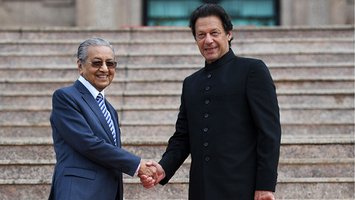
Imran Khan became the Prime Minister of Pakistan in August last year and visited Malaysia in November.
Three months before Imran Khan, 92-year-old Mahathir Mohammad again became the Prime Minister of Malaysia in 2018. Corruption was the biggest issue in Imran and Mahathir's election campaign. Along with this, the debt of China on both the countries was also increasing immensely.
Mahathir is a keen player of politics. He had been in power from 1981 to 2003 before that. At the same time, Imran Khan was the only cricket player before. Mahathir stopped China's $ 22 billion project as soon as he arrived and said that it was absolutely unnecessary.
On the other hand, Imran Khan showed as much disinterest in the $ 60 billion project of China in Pakistan under One Belt One Road as did Nawaz Sharif.
When Emraan Khan arrived in Kuala Lumpur in November 2018, he was welcomed as a rockstar. Imran Khan said that both Malaysia and Pakistan stand on a path.
Imran Khan had said, "Both me and Mahathir have been entrusted with power by the people, being free from corruption." We are both struggling with debt. We can come together and deal with our problems. Mahathir has brought Malaysia on a path of progress. We hope that we will learn from Mahathir's experience. ''
Both are Muslim-majority countries.
This was the beginning of Imran Khan and the close of Malaysia. Imran Khan called Mahathir Mohammad whenever tensions arose in India and Pakistan. It is said that Malaysia was the only country in Imran Khan's initial foreign tour from which Imran Khan did not ask for loan.
During the reign of Mahathir Mohammad, Pakistan came closest to Malaysia. There was an Economic Partnership Agreement between Pakistan and Malaysia in 2007.
During Imran Khan's visit, Mahathir had pledged to help Pakistan in energy security. On 5 August, when India announced the abolition of the special status accorded to Jammu and Kashmir, Mahathir was among the heads of nations whom Imran Khan called and sought support and Mahathir supported Imran.
Malaysia was still with Pakistan when the Kashmir issue went to the UN Security Council. Even at the United Nations General Assembly last month, the Malaysian Prime Minister raised the issue of Kashmir and besieged India. For India, it was nothing short of a shock.
Why is Malaysia with Pakistan? "There has been a good relationship between Malaysia and Pakistan for a long time," said Ravichandran Dakshinamurthy, an expert on strategic studies at the National University of Malaysia from the South China Morning Post. After the independence of Malaysia in 1957, Pakistan was among the countries that first recognized it as a sovereign country.
Ravichandran said, "Both Pakistan and Malaysia are associated with many Islamic organizations and cooperation. China's case is completely different with respect to these two. The relations between Malaysia and China are quite normal but the relationship between Pakistan and China is very special. China is the largest arms supplier in Pakistan and the relationship between the two countries is not good. As long as Mahathir Mohammed remained in power, the relationship with Pakistan was good. ''
India is the largest importer of edible oils. Considering India's stand, the Prime Minister of Malaysia said on Sunday that bilateral trade relations with India would be reviewed. He had said that India also exports to Malaysia and the business relationship between the two is bilateral and not one-sided.
India expressed a lot of resentment over Malaysia's stand on Kashmir and now it is being said that trade relations of the two countries may also be affected. Mahathir Mohammed has said that his government will review bilateral relations with India, according to news agency Reuters.
India may limit palm oil imports from Malaysia, according to a Reuters report. With this, India can also reconsider the import of other goods from Malaysia.
Mahathir had said in the UN General Assembly that India has kept Kashmir under its occupation. However, there is no comment on this from the government.
According to Reuters, Indian refiners have stopped buying palm oil from Malaysia for shipment in November and December. According to the agency, they fear that the Indian government may raise import duties. There are fears that the Indian government may take more steps to stop it.
On Monday, five traders told Reuters that they had stopped buying palm oil for shipment in November-December. India has been a big buyer of Malaysia's palm oil.
This attitude of India may affect Malaysia's palm oil industry. According to this report, this decision of India may benefit Indonesia.
Reuters contacted India's Ministry of Commerce in this matter but did not receive any reply. The Mumbai-based businessman told Reuters, "Before doing business with Malaysia, we need clarification. If there is no explanation from the government, then we will start trading from Indonesia." Sandeep Bajoria, CEO of Vegetable Oil Company in Mumbai, said, "Businessmen on both sides are Confused. We do not know what is going to happen? ''
Palm oil accounts for two-thirds of the food oils used in India. India imports 9 million tonnes of palm oil every year. This import is mainly from Malaysia and Indonesia.
In the first nine months of 2019, India imported 3 million tonnes of palm oil from Malaysia. According to the data of the Malaysian Palm Oil Board, India's monthly imports from Malaysia are 433,000 tonnes.
As long as Mahathir remained in power, relations with Pakistan have been good. After his retirement in 2003, Malaysia grew close to India. Last year, when there was a surprise return of Mahathir, it again grew close to Pakistan.
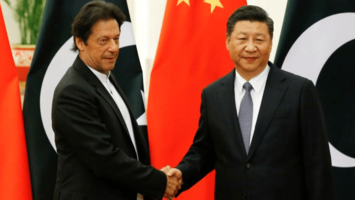
Imran Khan became the Prime Minister of Pakistan about 14 months ago. For the third time since then, he arrived in Beijing on Tuesday on a tour of China. Hours before reaching the capital of China, Pakistan's military spokesman said on Twitter that Pakistan Army Chief Qamar Javed Bajwa has arrived to hold a meeting with the Chinese military leadership. The tweet wrote that Bajwa will also attend the meeting of Chinese President Xi Jinping and Prime Minister Li Keqiang with Imran Khan.
Pakistan and China have been calling their friendship stronger than the Himalayas and sweeter than honey.
However, the Pakistani political leadership's visit comes just before the visit of Chinese President Xi Jinping to India. On the other hand, two months of the restrictions of the Government of India in Kashmir, India, have been completed. So analysts are very interested in this strategic visit to Imran.
Speaking to the BBC, Pakistan Foreign Minister Shah Mehmood Qureshi said that the second phase of the visit is the biggest agenda on the economic cooperation between the two countries, especially the second round on the economic corridor between China and Pakistan.
However, he said that China and Pakistan cooperate with each other on all issues, including all global issues including bilateral, so the visit should be seen as an ongoing process. Especially before the Chinese President's visit to India.
Qureshi said, "Before going to India, President Xi Jinping wants to consult Pakistan, he wants to be fully aware of Pakistan's point of view."
The Foreign Minister of Pakistan believes that there can be time spent on such issues so that President Jinping has a thorough knowledge of the situation in Pakistan before going to India. His reference was to the fresh political atmosphere and military skirmishes since the repeal of Articles 370 and 35A in Kashmir.
According to the details of the visit released from Pakistan's Foreign Ministry, Prime Minister Imran Khan will sign several agreements and draft of economic cooperation during his three-day visit.
According to the official statement, Prime Minister Imran Khan will exchange views on regional development including the situation related to the issue of peace and security born in Indian Kashmir from 5 August 2019 onwards.
President of Pakistan China Institute, Mushahid Hussain Syed believes that this visit of Imran Khan is very important from political and diplomatic point of view.
He says, "Just as China has supported Pakistan's position since August 5, the specific purpose of the visit is to create political and strategic coordination between Pakistan and China before President Xi Jinping's visit to India."
Mushahid Hussain Syed said, "We need to formulate our strategy on Kashmir in coordination with China because China is also a party to this dispute. India has illegally occupied China's land in Ladakh and the region has got new Union Territory has been included. Therefore the leadership of China and Pakistan will move forward on this issue together with a strategic mind. ''
However, political expert Dr. Nazir believes that the action taken by India in Kashmir has certainly hurt China. They refer to the airstrip being built in Ladakh and a report on the things hidden under it.
China is not happy with the actions taking place in this disputed region. So Xi Jinping can use his tour of India to improve things in this regard. But the problem is that India has taken steps on it and it is adamant on it.
How important is economic cooperation with China for Pakistan's ailing economy. Pakistan's Foreign Ministry has said that Prime Minister Imran Khan will meet senior representatives of the Chinese trade and corporate sector to further strengthen bilateral trade, commercial and investment partnerships.
In addition, Prime Minister Imran Khan will apprise the Chinese leadership of the government's recent historic decisions to speed up the China-Pakistan Economic Corridor (CPEC) projects.
Mushahid Hussain Syed says that the expansion of China-Pakistan Economic Corridor will also be discussed on this tour.
"Now they also want to add Afghanistan as a new member to this economic corridor. Therefore, a project to connect Peshawar to Kabul will also be considered in this tour," he says.
The US has said that it is going to impose visa restrictions on Chinese authorities because of the persecution of the Muslim population in China.
Earlier on Monday, the US blacklisted 28 Chinese institutions working in the US in the case of harassment with Weigar Muslims in China's Xinjiang province.
US Secretary of State Mike Pompeo said that the Chinese government was carrying out "a highly repressive campaign". At the same time, China has described these allegations as baseless.
In a statement, Pompeo has accused the Chinese government of harassing Vigar, Kazakh, Kyrgyz Muslims and other minority Muslim communities.
He said, "A large number of people have been kept in detention camps, they are monitored at a high level. People have strict control over their religious and cultural identity. ''
China has described the US step as unacceptable.
On Monday, Chinese Foreign Ministry spokesman Geng Shuan said, "The issues the US has raised by citing human rights are nothing at all here."
"All these accusations are nothing but a ploy of America, so that it can interfere in China's internal affairs."
The visa restrictions that the US has imposed will apply to the officials of the Chinese government and the Communist Party, along with their family members.
There is currently a trade war between the United States and China. China recently sent a team to the United States to discuss trade war.
A major security operation has been going on in the last few years in China's far western province of Xinjiang.
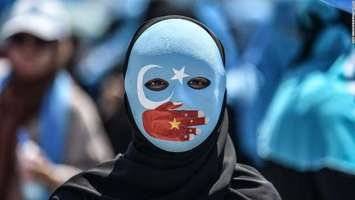
Human rights groups and the United Nations have said that China has imprisoned more than 1 million Weigar and other ethnic minorities in the province. There are prison houses here in a very large area.
There are allegations that in these detainees Weigar Muslims are forced to leave Islam, speak only the Chinese Mandarin language and follow the rules of China's leftist government.
But to the contrary, China says that it is running a training camp in Xinjiang, through which training the Weigar Muslims will help them to get jobs and get involved in Chinese society. Through this training, he also talks about curbing extremism.
Many other countries, including the US, have strongly condemned the camps built in China's Xinjiang province.
Last week, Pompeo held a press conference in the Vatican alleging that China asks its citizens to worship the government instead of worshiping their God.
Earlier in July, more than 20 countries signed a joint letter to the United Nations Human Rights Council condemning China's treatment of Weigar and other Muslims.
Meanwhile, Pakistan Prime Minister Imran Khan is also visiting China these days. A few days ago, when Prime Minister Imran Khan was asked questions on Weigar Muslims living in China, he could not give any answer.
In an interview to Al-Jazeera on 14 September, the journalist asked Imran Khan that there was a lot of criticism in the West about the treatment of Weigar Muslims in China. Have you ever formally discussed the matter with Chinese President Xi Jinping?
In response to this question, Imran Khan had said, "You know that we are facing many problems within our country." I don't even know much about it. For the last one year, we have been struggling with a bad economy and now Kashmir. But I can say that China is our best friend. ''
Weigars are actually Muslims belonging to Turkey. About 45 percent of the population of Xinjiang province is Weigar Muslims. In addition, 40 percent of Han Chinese.
After China took over East Turkistan in 1949, a large number of Han Chinese and Weigar Muslims felt threatened by their culture, due to which these communities started migrating.
Xinjiang is officially an autonomous region of China, such as Tibet in the south.